

Growth is typically reflected in new customers, new products, additional capacity, new business models, acquisitions, international expansion, or entry into new industries. Each of these goals also changes the organization that must implement them.
This means more people must work together. Responsibilities shift across functions. New interfaces emerge. More stakeholders are involved in decision-making. Existing key personnel must take on additional tasks. Informal communication becomes increasingly difficult to maintain. Leadership teams spend more time aligning priorities across a growing number of initiatives.
At some point, growth becomes a question of organizational capability: Can the organization handle the growth? Leaders should ask themselves this question long before organizational friction begins to impact customers, delivery performance, margins, or strategic speed.
Growth creates organizational load
Many growth challenges develop gradually: Decision-making takes longer. Coordination increases. Responsibilities become less clear. Teams develop their own priorities and ways of working. Key people become bottlenecks because knowledge, authority, or customer relationships remain concentrated around them. Internal communication becomes more complex, and customers or other external stakeholders may begin receiving different messages from different parts of the organization.
Each individual signal can appear manageable. A combination of several signals can indicate that the organization’s existing structures and operating practices are reaching their limits.
This is a central idea behind our viadoo Growth Readiness Review.
In this context, an organization’s growth readiness describes its ability to translate strategic ambitions into a reliable structure as scale and complexity increase.
Decision-making under uncertainty
Growth readiness also has a cultural dimension. This becomes clear from the PwC Global Automotive Sector Outlook 2026. The study is based on responses from 720 executives in 33 countries, including 86 executives from Germany.
In the study, only 57 percent of the executives surveyed stated that they had a high tolerance for strategic risks. In the group classified by PwC as “future-ready,” this figure was 80 percent. PwC also highlights workforce skills and corporate culture as key factors in building software and AI capabilities, pointing to agile cultures that support short learning cycles.
The concept of “Just Culture”
This has concrete implications for leadership teams: Growth often requires decisions to be made before all variables are known. New products, markets, technologies, and business models create situations in which management must balance speed, accountability, a willingness to learn, and risk awareness.
A Just Culture can support this environment. Risks, mistakes, operational concerns, and even weak signals must reach the right decision-makers early on. Responsibilities must remain clear. Executives need reliable information from across the company to adjust decisions and priorities.
Twelve weeks from production ramp-up to first delivery
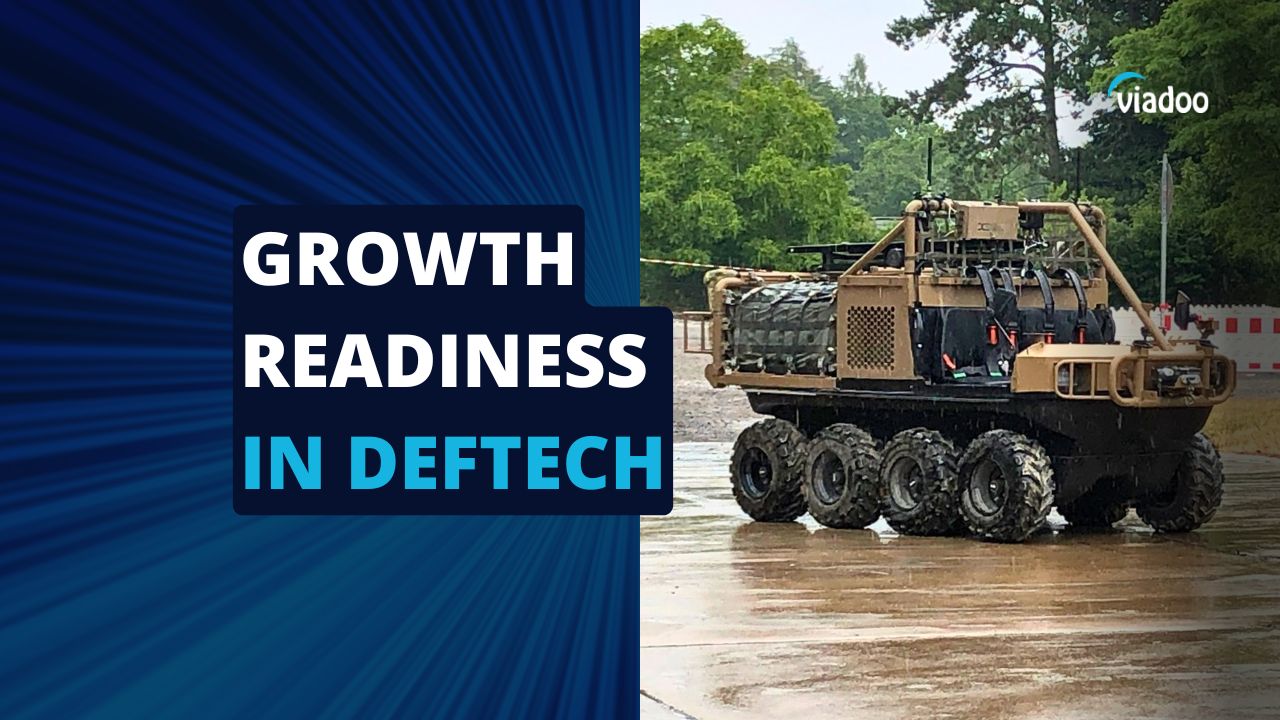
A recent example from the European defense industry illustrates how organizational capabilities can translate into speed of implementation. ARX Robotics and DEUTZ recently announced that the first GEREON unmanned ground systems manufactured at the DEUTZ plant in Ulm had been delivered just twelve weeks after the start of their joint production ramp-up.
The partnership combines ARX Robotics’ expertise in system development, software, and integration with DEUTZ’s capabilities in industrial manufacturing, quality assurance, and scaling. This requires interfaces between companies and functions. Responsibilities must be clearly defined. Decisions must be made quickly enough. Quality requirements must be coordinated. Production targets must be translated into operational priorities.
Such partnerships can increase available capacity and bridge skill gaps. Their effectiveness depends heavily on the organizational system that links these capabilities.
Four areas deserve particular attention
A comprehensive review or assessment of organizations is not always the first necessary step. For an initial assessment, we have therefore developed the free viadoo Growth Readiness Quick Check. This allows users to analyze their company’s or organization’s readiness for growth from four different perspectives:
1. Decisions and governance
How quickly can leadership teams make relevant decisions? As organizations grow, approval processes and dependencies typically increase. Leadership teams need clarity regarding decision-making authority, escalation paths, priorities, and governance mechanisms.
2. Roles, interfaces, and collaboration
Growth creates new roles, functions, teams, and external partners. The quality of the interfaces between them is becoming increasingly important. Clear responsibilities, effective handoffs, and cross-functional collaboration help maintain the speed of execution even as complexity increases.
3. Leadership and organizational capability
Growth changes the demands placed on leaders and key personnel. An organization requires sufficient leadership capacity, distributed responsibility, knowledge transfer, and the ability to learn from experience. Corporate culture influences whether relevant information reaches decision-makers and whether teams can adapt their behavior to changing requirements.
4. External impact
Internal complexity eventually becomes visible outside the organization as well. Customers, suppliers, investors, and other stakeholders directly experience unclear responsibilities, inconsistent communication, slow responses, or delivery problems.
These external signals can provide valuable indications that the challenges of organizational growth already extend beyond internal inconveniences.
From signals to causes
The first signs of growth friction are often easy to spot: Another meeting is added to the schedule. Management creates a new coordination role. Teams expand existing processes. In addition, another reporting layer emerges. Senior leadership intervenes more frequently to resolve cross-functional issues.
Our viadoo Growth Readiness Review therefore focuses on three management questions:
Where does growth create unnecessary friction?
We examine decision-making logic, responsibilities, interfaces, dependencies, and collaboration across the entire company.
Which issues have the greatest impact?
Leadership teams typically face multiple organizational challenges simultaneously. Understanding their impact helps set meaningful priorities.
Where should leadership start?
Consequently, we identify where management attention and targeted organizational changes can create the greatest leverage for performance and further growth.
A shared view from different perspectives
People view challenges from their own perspectives. For example, management may see a governance issue, while employees may experience unclear responsibilities. Sales, on the other hand, may notice slow response times, while operations may identify unstable interfaces. Customers, finally, simply experience inconsistencies.
The viadoo Growth Readiness Review combines these perspectives with available company data. Our approach therefore consists of four steps:
1. Listening
We speak with executives and, depending on the scope, with other relevant stakeholders. Existing data and targeted employee feedback provide additional perspectives.
2. Understanding
We identify recurring patterns, dependencies, unclear responsibilities, interface issues, and causes of organizational friction.
3. Prioritization
We assess which issues have the greatest impact on performance and future growth and develop a shared view among executives regarding priorities.
4. Actions
We translate the findings into concrete recommendations. The “Extended Review” also includes a prioritized 90-day implementation plan.
The result is a fact-based picture of the company’s readiness for growth, clearer priorities for management, and concrete next steps.d picture of organizational growth readiness, clearer management priorities, and specific next steps.
The key point is this: The growth strategy defines the goal. Growth readiness determines how reliably the company can achieve that goal.
Featured image: © Faust / viadoo GmbH
Since 2004, viadoo has been supporting companies and organizations in the defense sector with complex transformation projects. The focus is on the human factors that can either accelerate or hinder implementation: leadership, governance, collaboration, engagement, and communication.
Author(s)

Dr. Dominik Faust verfügt über umfassende Erfahrung in der Führung komplexer, funktionsübergreifender Initiativen an der Schnittstelle von Transformation, Governance und Kommunikation (P&L-Verantwortung > 6 Mio. €). Als Gründer der viadoo GmbH unterstützt er seit vielen Jahren Führungskräfte aus KMUs und DAX-Konzernen operativ bei der Planung und erfolgreichen Steuerung anspruchsvoller Projekte. Dazu gehören M&As (Post-Merger Integration), Restrukturierungen oder Projekt-Recovery.